Dihydrotestosterone (DHT) is the primary hormonal driver of male pattern baldness — also called androgenetic alopecia. It doesn't affect all men equally, but in those with a genetic predisposition, it triggers a progressive process of follicle miniaturization that eventually leads to permanent hair loss. Here's exactly how it works.
Step 1: Testosterone Converts to DHT
DHT is not a separate hormone your body produces independently. It's formed when testosterone is converted by an enzyme called 5-alpha-reductase (5-AR). This enzyme is found in high concentrations in the skin, scalp, and prostate. Two isoforms exist: Type 1 (dominant in skin and liver) and Type 2 (dominant in scalp follicles and prostate).
The conversion is straightforward: testosterone → DHT, catalyzed by 5-AR. DHT is approximately three to five times more potent than testosterone at binding to androgen receptors. This potency is what makes it the relevant driver of follicle behavior in the scalp.
Step 2: DHT Binds to Androgen Receptors in Follicles
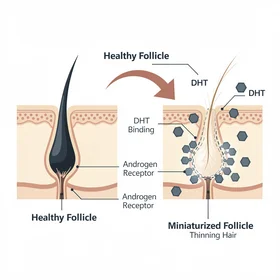
Hair follicles contain androgen receptors. In men without genetic susceptibility, DHT binding at these receptors has little effect on hair growth cycles. In men with androgenetic alopecia, however, follicles in the scalp's androgen-sensitive zones (the frontal hairline, crown, and vertex) have receptors that are genetically programmed to respond to DHT with a damaging cascade.
The mechanism isn't fully mapped at the molecular level, but the downstream effect is well-established: DHT binding shortens the anagen (growth) phase of the hair cycle and triggers progressive miniaturization.
Step 3: Follicle Miniaturization
Under continued DHT exposure in susceptible follicles, the hair growth cycle progressively shortens. Terminal hairs — thick, pigmented, long-growing — gradually transform into vellus hairs: fine, colorless, and barely visible. This process, called miniaturization, happens over years or decades depending on genetics and DHT levels.
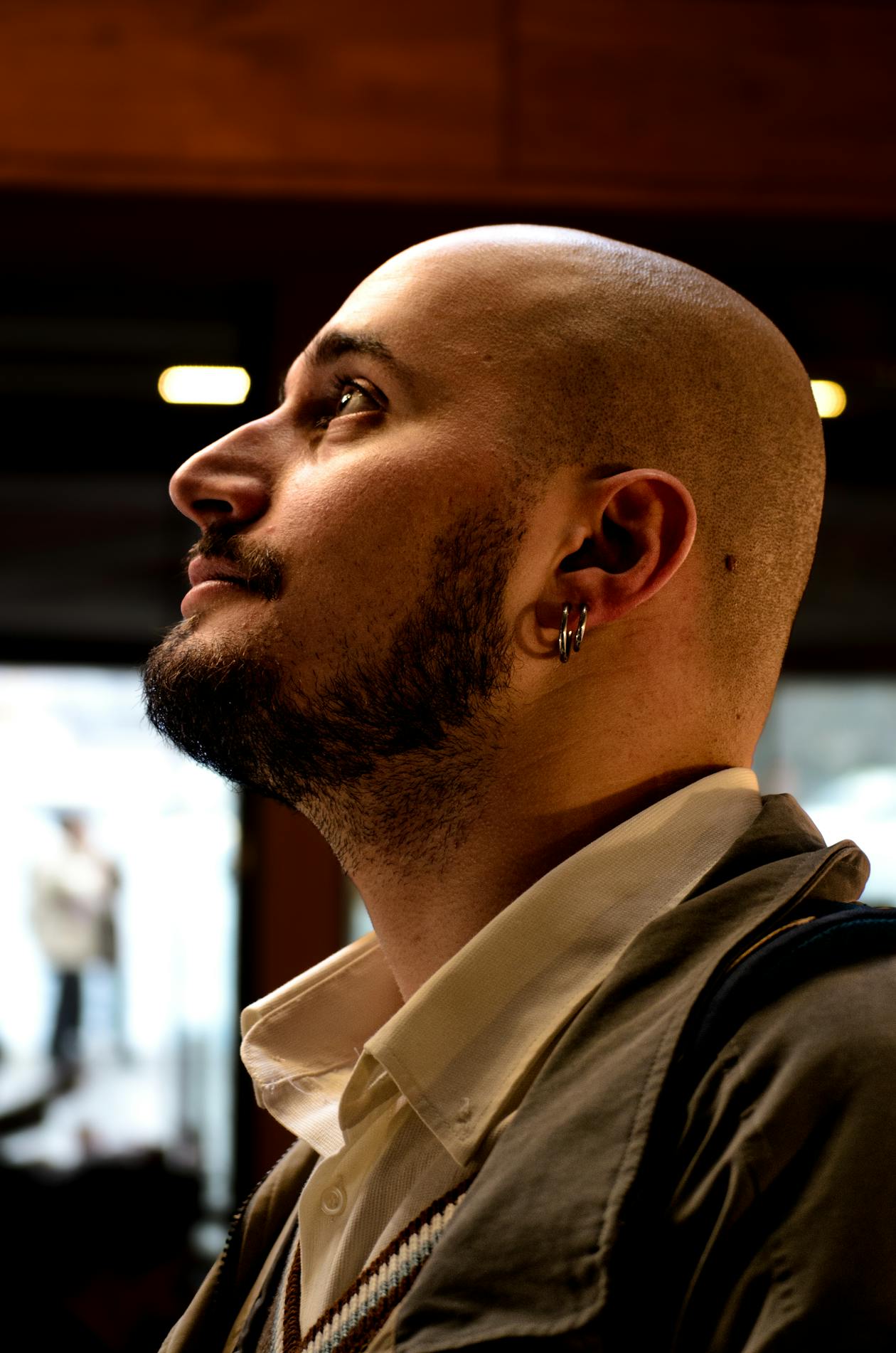
Hairline recession typically begins at the temples and crown — both androgen-sensitive zones.
Once a follicle has fully miniaturized, it is generally considered non-rescuable. This is why early intervention matters. Blocking DHT before significant miniaturization has occurred is more likely to preserve existing hair than reversing loss that's already happened.
Why Only Some Men Are Affected
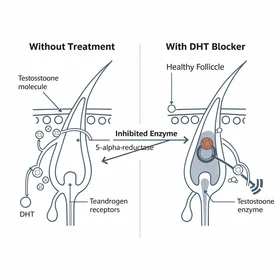
Two variables determine susceptibility: the sensitivity of androgen receptors in the follicle (genetic), and the local DHT concentration in the scalp. Men with more sensitive receptors will experience miniaturization at lower DHT levels. Men with higher 5-AR activity will produce more DHT from the same testosterone level. Both factors are largely inherited.
This explains why identical twins can have very different hair loss trajectories, and why some men maintain full heads of hair into their 80s while others begin losing in their 20s.
What DHT Blocking Is (and Is Not)
A DHT blocker is any compound that reduces DHT's effect on follicles — either by inhibiting 5-alpha-reductase (reducing DHT production) or by blocking androgen receptors in the follicle (reducing DHT's ability to bind). Most natural DHT blockers work via the first mechanism. Pharmaceutical options like finasteride and dutasteride are potent 5-AR inhibitors.
DHT blocking does not regrow hair that's been lost from fully miniaturized follicles. It works by slowing or halting miniaturization in follicles that still have some function. This distinction matters for setting realistic expectations. For a detailed comparison of natural vs pharmaceutical blocking options, see our DHT blocker comparison. If side effects are your primary concern, the side effects breakdown covers what the clinical data actually reports. And for a closer look at the natural compound evidence, see natural DHT blockers.
The Scalp's DHT Paradox
One often-cited paradox: DHT that damages scalp follicles is the same hormone responsible for beard and body hair growth in many men. This is because follicles in different locations have different androgen receptor sensitivities — scalp follicles are inhibited by DHT in susceptible men, while beard follicles are stimulated by it. This is why some men with significant hair loss grow robust beards.